
When Hope Seemed to Slip Away
After five years of marriage, Ananya and Arjun had one shared dream—to welcome a child into their family.
Like many couples, they believed pregnancy would happen naturally.
Months turned into years.
Each negative pregnancy test brought disappointment.
Family gatherings became emotionally difficult.
Questions from relatives became harder to answer.
They consulted several doctors, tried medications, and even underwent multiple fertility evaluations, but pregnancy remained elusive.
After further investigations, they were advised to visit East End Fertility Clinic, where they met experienced Consultant Gynaecologists, Endoscopic Surgeons & IVF Specialists.
Following a comprehensive fertility assessment, they learned that Intracytoplasmic Sperm Injection (ICSI) could offer them a promising treatment option.
That consultation transformed uncertainty into hope.
Understanding ICSI (Intracytoplasmic Sperm Injection)
The fertility specialists carefully explained the procedure to the couple.
What is ICSI?
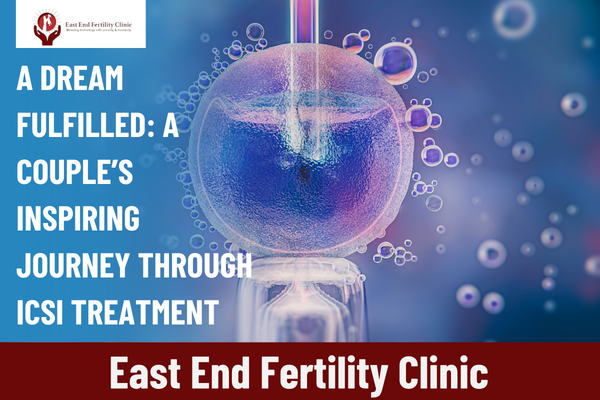
ICSI (Intracytoplasmic Sperm Injection) is an advanced form of In Vitro Fertilization (IVF) in which a single healthy sperm is carefully injected directly into a mature egg inside the laboratory.
The resulting embryo is then cultured and, when appropriate, transferred into the uterus.
ICSI is widely used in selected infertility cases, particularly when male factor infertility is present or when conventional IVF fertilization has been unsuccessful.
Treatment recommendations are always individualized after thorough evaluation.
When is ICSI Recommended?
ICSI may be considered in selected situations, including:
Low sperm count
Poor sperm motility
Abnormal sperm morphology
Previous IVF fertilization failure
Surgically retrieved sperm
Unexplained infertility in selected couples
Certain genetic or reproductive conditions based on specialist evaluation
The most appropriate fertility treatment depends on the underlying cause of infertility.
Understanding Infertility
Infertility is generally defined as the inability to conceive after:
12 months of regular, unprotected intercourse for most couples
6 months for women aged 35 years or older (depending on individual circumstances)
Infertility can result from female factors, male factors, combined factors, or remain unexplained.
A detailed fertility evaluation helps identify the most suitable treatment.
The Emotional Journey of Infertility
For Ananya and Arjun, infertility affected every aspect of life.
They experienced:
Emotional stress
Anxiety
Feelings of isolation
Social pressure
Loss of confidence
Fear that parenthood might never become a reality
The fertility specialists at East End Fertility Clinic took time to explain every step of the treatment journey.
They emphasized that infertility is a medical condition—not a personal failure—and that modern reproductive medicine offers many effective treatment options.
This compassionate approach gave the couple renewed confidence.
Comprehensive Fertility Care at East End Fertility Clinic
The team believes every couple deserves individualized fertility care based on scientific evidence and compassionate support.
Their comprehensive fertility program includes:
Detailed fertility consultation
Female reproductive evaluation
Male fertility assessment
Hormonal investigations
Ultrasound monitoring
Semen analysis
Ovarian stimulation
Egg retrieval
ICSI procedure
Embryo culture
Embryo transfer when appropriate
Fertility counseling
Pregnancy monitoring
Long-term reproductive guidance
Every treatment plan is personalized according to the couple’s medical history, fertility diagnosis, age, and reproductive goals.
Ananya and Arjun’s Personalized ICSI Journey
Following complete evaluation, the fertility team recommended ICSI treatment.
Their Care Included:
Comprehensive fertility consultation
Hormonal evaluation
Ultrasound monitoring
Semen analysis
Individualized ovarian stimulation
Egg retrieval procedure
Intracytoplasmic Sperm Injection (ICSI)
Embryo development monitoring
Embryo transfer
Pregnancy testing
Ongoing follow-up and emotional support
Throughout every stage, the couple received personalized guidance and compassionate care.
Benefits of ICSI Treatment
For appropriately selected couples, ICSI offers several important advantages.
Potential Benefits Include:
Improved fertilization in selected male infertility cases
Advanced laboratory techniques
Personalized fertility treatment
Use of a single healthy sperm for fertilization
Opportunity for biological parenthood
Comprehensive reproductive care
Hope for couples facing previous fertilization challenges
Success rates depend on many factors, including maternal age, egg quality, sperm quality, embryo quality, and individual medical conditions.
Recovery Journey: The Joy of New Beginnings
The treatment journey required patience, courage, and unwavering hope.
There were emotional highs and lows.
But the fertility team stood beside them every step of the way.
After the embryo transfer, the waiting period felt endless.
Then came the phone call they had been dreaming about.
The pregnancy test was positive.
Months later, Ananya safely welcomed a healthy baby into the world.
Holding their child for the first time made every challenge worthwhile.
Their journey became a reminder that hope, expert medical care, and perseverance can create extraordinary moments.
Looking Toward a Brighter Future
Today, Ananya and Arjun continue to cherish every milestone with their growing family.
They encourage couples struggling with infertility not to delay seeking specialist care.
Their experience demonstrates that infertility treatment is not just about medical procedures—it is about restoring hope, supporting families, and helping dreams become reality.
Under the expert care of the specialists at East End Fertility Clinic, ICSI became more than an assisted reproductive technique—it became the beginning of a beautiful new chapter.
Frequently Asked Questions (FAQs)
What is ICSI?
ICSI (Intracytoplasmic Sperm Injection) is an advanced fertility procedure in which a single sperm is injected directly into an egg to assist fertilization as part of an IVF treatment cycle.
How is ICSI different from IVF?
In conventional IVF, sperm and eggs are placed together for natural fertilization in the laboratory. In ICSI, a single sperm is directly injected into the egg to facilitate fertilization.
Who may benefit from ICSI?
ICSI may be recommended for selected couples with male factor infertility, previous IVF fertilization failure, surgically retrieved sperm, or other fertility conditions based on specialist evaluation.
Is ICSI safe?
ICSI is a well-established assisted reproductive technique performed by trained fertility specialists. The suitability of treatment is determined after careful clinical assessment.
How successful is ICSI?
Success rates vary depending on maternal age, egg quality, sperm quality, embryo development, uterine factors, and overall reproductive health.
When should a couple consult a fertility specialist?
Couples who have not conceived after one year of regular, unprotected intercourse—or after six months when the woman is 35 years or older—should consider a fertility evaluation.
Conclusion: Every Dream Deserves a Chance
Infertility can be emotionally challenging, but advances in reproductive medicine have made parenthood possible for many couples through personalized fertility treatment.
Under the expert supervision of the Consultant Gynaecologists, Endoscopic Surgeons & IVF Specialists at East End Fertility Clinic, couples receive comprehensive fertility evaluation, individualized ICSI treatment planning, advanced embryology support, compassionate counseling, and dedicated follow-up throughout their journey.
Ananya and Arjun’s inspiring story reminds us that infertility is a medical condition—not the end of hope. With early evaluation, expert fertility care, and advanced assisted reproductive technologies such as ICSI, many couples can move closer to achieving their dream of building a family.