
ICSI (Intra Cytoplasmic Sperm Injection): A Breakthrough Fertility Solution
Infertility affects millions of couples worldwide, and in nearly 40–50% of cases, male factors contribute significantly. Thanks to remarkable advancements in reproductive medicine, procedures like ICSI (Intra Cytoplasmic Sperm Injection) have transformed the dream of parenthood into reality for countless families.
ICSI is one of the most advanced forms of assisted reproductive technology (ART), often used along with IVF to overcome severe male infertility issues. Under the expert care of specialists like Dr. G.B. Dutta, ICSI has helped many couples achieve successful and healthy pregnancies.
What Is ICSI?
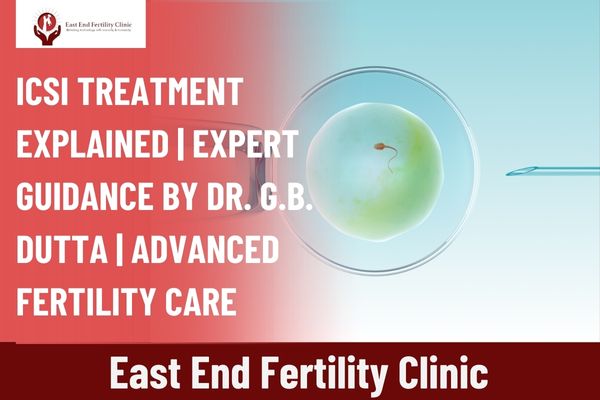
ICSI is a specialized micromanipulation technique where a single healthy sperm is selected and injected directly into the center of a mature egg.
This ensures fertilization even in cases where sperm quality or motility is extremely poor.
ICSI is highly effective in situations where natural fertilization is unlikely using conventional IVF methods.
Who Needs ICSI?
ICSI is recommended for couples experiencing:
Male Factor Infertility
Low sperm count (Oligospermia)
Poor sperm motility (Asthenospermia)
Abnormal sperm shape (Teratozoospermia)
Blocked or absent vas deferens
Failed attempt at conventional IVF
Other Conditions Where ICSI Helps
Unexplained infertility
Poor fertilization in previous IVF cycles
Use of frozen or surgically retrieved sperm
Patients opting for genetic testing (PGT)
The ICSI Process: Step-by-Step
1. Ovarian Stimulation
Women receive hormonal injections to produce multiple healthy eggs.
2. Egg Retrieval
Eggs are collected safely under ultrasound guidance.
3. Sperm Preparation
Sperms are washed and selected based on motility and morphology.
4. Microscopic Injection
A single sperm is injected into each egg using a microneedle under powerful magnification.
5. Embryo Development & Monitoring
Fertilized eggs mature in a controlled lab environment for 3–5 days.
6. Embryo Transfer
A healthy embryo is placed into the uterus for implantation.
7. Pregnancy Test
A blood test is done after 12–14 days to confirm pregnancy.
Why ICSI is a Game-Changer
ICSI offers several key advantages:
High fertilization success rate
Effective even with very low sperm count
Suitable for surgically retrieved sperm
Prevents fertilization failure
Improves chances of pregnancy in difficult cases
Under the expertise of Dr. G.B. Dutta, patients receive personalized infertility evaluation, state-of-the-art lab support, and compassionate guidance throughout the journey.
Success Rate of ICSI
ICSI success depends on several factors including:
Woman’s age
Egg quality
Sperm health
Uterine condition
Lifestyle factors
On average, ICSI offers 60–75% fertilization rates, making it one of the most reliable fertility treatments available today.
Risks and Considerations
Though generally safe, patients should be aware of:
Mild discomfort after egg retrieval
Risk of multiple pregnancy if more than one embryo is transferred
Emotional stress associated with fertility treatments
Rare chances of genetic issues when using severely impaired sperm
Specialists like Dr. G.B. Dutta ensure detailed counselling and testing to minimize risks and optimize outcomes.
Conclusion
ICSI has revolutionized the field of reproductive medicine, offering hope to couples struggling with even the most challenging forms of infertility. With advanced lab techniques, high precision, and individualized care, fertility experts like Dr. G.B. Dutta continue to make parenthood possible for thousands.
If you or your partner are facing infertility, ICSI may be the key solution to help you start or grow your family.